Thursday, 20 December 2012

Why are we not sharing


Why are we not sharing |


A blog by Anna Salaman, Head of Formal Learning, Royal Museums Greenwich (incorporating the National Maritime Museum, Royal Observatory, Greenwich, Queen’s House and Cutty Sark)
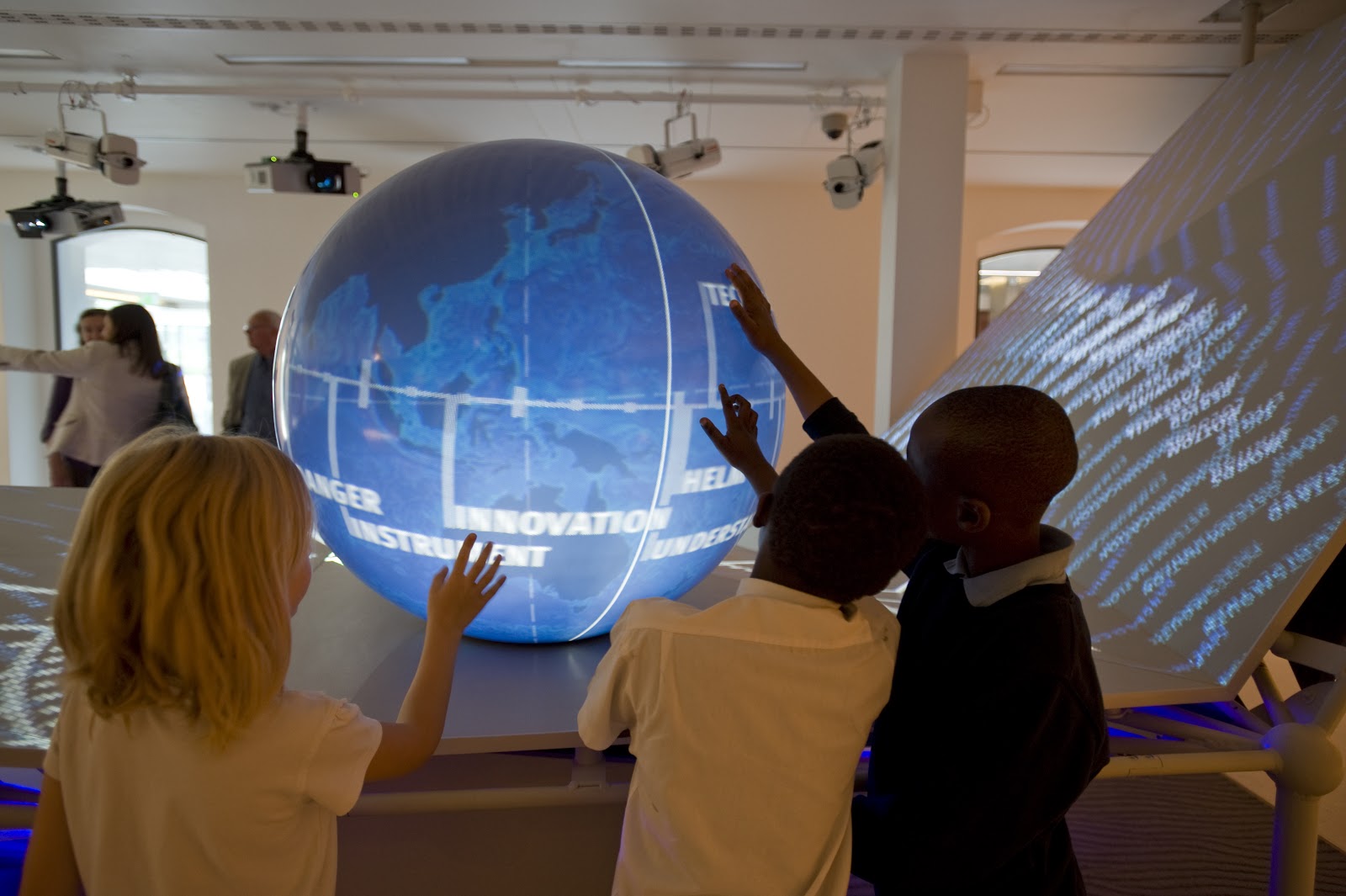


Evaluation is good… isn’t it?


Before exploring some of the reasons why we might not be sharing, or joining up our thinking around evaluation across the sector, it’s useful to think about why we are doing it, and whether or not it’s a good thing.

In order to give evaluation value, we must, of course, value audiences. In the last 20 years the museums sector has come a long way in its relationship with its audiences. Learning is now at the heart of everything we do; consultation and participation underpins our interpretation strategies, the object is no longer ‘king’ but a focus for conversation between the museum and its visitor, museums are no longer places to passively receive packages of knowledge and perceived wisdom but rich arenas for skills-building, nurturing understanding and inspiring creativity. They are welcoming, social spaces where everyone can happily enjoy a cup of coffee and a chat without the pressure of reading every label, aren’t they?

Sometimes they are – and there are many wonderful examples of this, but often they are not and, it is often coherently argued, neither should they be. As a fully paid up member of the fraternity[1] my vote is always audience-centred. But I cannot, hand-on-heart, say with full confidence that this is the view of all my colleagues across the many departments here, or across the sector as a whole. And, if we are still debating the place for learning, the audience and participation, then perhaps we are a long way from being able to adopt a united approach to evaluation.

Are we still learning how to evaluate?

Let’s assume we do, as a sector, value evaluation. There is, after all, much evidence to support this, with strong investment in evaluation strategies and consultative planning and development from many leading institutions. But it appears that expertise and confidence in these disciplines is still growing and has yet to be fully embedded as standard practice across the sector. Many of us are, all too often, going back to first principles and replicating practice every time we begin a new piece of work when the answers are often already there if we know where to look for them. I wonder…

How many institutions have a permanent evaluation team?

How many institutions prioritise audience and evaluation research over content and collections research?

Why national projects such as the Arts Council England funded Schools and Museums initiative require partners to undertake individual evaluation rather than evaluating the project as a whole?

Do we value practice-based expertise as highly as research-based expertise?

This is not an exercise in finger-pointing, simply a reflection that perhaps we are still learning how to evaluate.

 Sharing is good…isn’t it?


Why aren’t we sharing..?


So, if we are still learning how to evaluate as a sector, can we be expected to know how to share as a sector? Or to have the confidence to share something we don’t fully understand or embrace? Is it that we won’t share, or that we simply can’t? Or – most likely – a bit of both?

At this point, it is important to point out that there is actually some sharing going on. Strands of recent MA and GEM conferences, the Visitor Studies Group training and academic studies from leading centres in evaluation and Museology [such as Leicester and Warwick Universities], as well as individual organisations have all had a good go. In my own field of museum learning I have found colleagues from other institutions only too willing to share both their practice and their findings – a quick email or phone call has often yielded fantastic results and, in many cases, built new working relationships. However, a quick Google search has been less successful. Perhaps all this points not to a lack of willingness to share but, perhaps, to a lack of opportunity or structure for doing so in a coherent and sustainable way.

Here at the Royal Museums Greenwich [RMG is made up of: National Maritime Museum, The Queen’s House, Royal Observatory, and the Cutty Sark and has a 2 million-strong collection] we have gone on a bit of an evaluation journey [or ‘voyage’ – we are maritime museums after all] over the last few years. In fact, we are still on it, still learning, and long may the voyage last.

Even within my own organisation we have struggled to share: Did your evaluation ask the right questions for my project? Do I need to fully understand the project before I can fully understand the evaluation? But that’s a digital project and this is a whole gallery! Have I got time to look into this in depth with everything else going on?

The answer is, of course, a Royal Museums, Greenwich-wide evaluation strategy which all of these findings feed into and out of. To make sense of all our visitor research and map it in such a way that evaluation for the Maritime Art Collection and the Queen’s House yields useful information for the Royal Observatory and Astronomy; that evaluation outcomes for digital interactives in the National Maritime Museum are useful for Cutty Sark.  

And if that is indeed the answer, then can the wider museum sector effectively share evaluation without a nationwide strategy?

An interesting ‘sharing’ analogy came recently during the research and front-end evaluation [oh yes!!] phase of a forthcoming Children’s Gallery project here. In a workshop with Jo Graham [Learning Unlimited] we learned about the characteristics of different types of play and the evolution of ‘sharing’ in children. Very young children don’t share – they play in parallel, often the very same game with the very same toys, each brumming the same red car along parallel pieces of carpet. As pre-schoolers they become more social and friendships begin to form. By Key Stage 1 they are developing a strong sense of friendship and are often well-versed in the joys and advantages of cooperation and sharing [well, some of them…]

Perhaps, as a sector, we are in our infancy when it comes to evaluation. Perhaps as we grow into confident, well-adjusted, joined-up evaluators we will cease working in parallel – following the same methods and asking the same questions as each other – and begin to cooperate and collaborate.  

Or is it all far less interesting than all this – is it simply a question of resource? Which brings us back to ‘value’ again. Do we value evaluation highly enough to invest the necessary time, money and people in strategic, effective, long-term, joined-up evaluation? In this age of austerity for the cultural sector it is still, sadly, commonplace for learning to bear the brunt of the cuts. If this is an indication of where our priorities lie then perhaps that says something significant about how much, as a sector, we value evaluation and the voice and opinion of our audience.

On the bright side, however, key funding organisations value evaluation extremely highly, demanding ‘evidence’ of need for any funding application and ‘a fully comprehensive evaluative report’ at the end of a project – often withholding actual cash until they see it in black and white!

And there other questions about sharing evaluation:

Is it because evaluation is not always valued as ‘proper research’?

Is it because we still value the object over the audience, or our own expertise and knowledge over that of the audience?

Are we afraid that we will expose our failings and be found woefully lacking?

Should we be sharing beyond the sector and, if so, how far? How about our recent secondary evaluation? Should we share it with the Times Education Supplement? Teachers’ and Headteachers’ conferences? Ofsted?

Are we seen as valuable contributors to the wider [formal] learning debate?

I feel I could go on and on and on….


So how should we share?


I have recently been involved in two significant evaluation processes for the National Maritime Museum with Nicky Boyd. One to support the development of the Museum’s forthcoming ‘Nelson, Navy Nation’ gallery, and one to, once again, try to solve the sticky problem of why we don’t get more visits from secondary schools. Both evaluations yielded fascinating results, which I am keen to share. But shouldn’t sharing go beyond simply posting the reports on GEM or sticking them on our website? And are the results really that fascinating – or just fascinating to us and the particular issues we face? If evaluation has taught me anything, it’s to ‘ask the audience’ so, answers on a [digital] postcard please: would you be interested in the findings of these evaluations and how would you like them disseminated? And have you got any interesting stuff I could have a look at?!

Drop me a line at: asalaman@rmg.co.uk

Author | Anna Salaman, Head of Formal Learning, Royal Museums, Greenwich


[1] This is not an official organisation – simply a way of expressing that I am professionally dedicated to museums learning

The Late Shows


 Evaluation case study | The Late Shows


To share or not to share? When it comes to sharing evaluation for The Late Shows, Newcastle and Gateshead’s annual Museums at Night event, the short answer is yes, we do need to share evaluation. But how?

The team here at Tyne & Wear Archives & Museums has been running The Late Shows for six years now. In 2007 it started as a one-night event with 14 cultural venues taking part including Discovery Museum, Baltic Centre for Contemporary Art and the Laing Art Gallery. All the venues stayed open late and put on free events and exhibitions, which aimed to entice a new, younger audience through their doors [see image].


 The Late Shows 2012 took place over two nights on 18 and 19 May and we had a record 56 venues in the line-up and saw thousands of visitors brandishing their Late Shows glowsticks as they swarmed through the streets of Newcastle and Gateshead, visiting as many venues as they could [see the image of the Late Show CitySightSeeing Bus]. Venues which took part in the 2012 event included the Castle Keep, Mushroom Works artists’ studios and Newcastle’s Literary and Philosophical Society. We achieved 30,000 visits across The Late Shows venues in 2012!


With so many venues and artists taking part, and The Late Shows being a free, non-ticketed event, it has the potential to be a difficult or expensive project to evaluate but we have tried to keep it as simple as possible.

All the marketing and evaluation for The Late Shows is carried out in-house by the Tyne & Wear Archives & Museums communications team. Through our evaluation we aim to not only evaluate our marketing and track visitor satisfaction [see image of happy visitors] but also to see whether we have achieved various aims which include encouraging people to visit venues they have never been to before and inspiring them to return again throughout the year.


Every year we work with a fantastic team of Late Shows volunteers [see image] who act as ambassadors for the event, welcoming visitors to each venue, keeping track of visitor numbers and, of course, handing out those sought-after glowsticks. Another of their key tasks is to encourage people to fill in our incentivised evaluation survey which they can do online [using Survey Monkey] or by returning a freepost form after the event.


The findings from our evaluation are essential when it comes to shaping subsequent years’ events. It’s vital that the results are shared with all 50-plus participating venues so they can take the feedback into account when they programme their event for next year. We have seen everything from ghost tours and snake handling to mass drawing and performance art in The Late Shows programme over the years and each have played a role in making The Late Shows what it is – a showcase for the outstanding creativity and culture here in the North East. However, no venue wants to take the risk of programming something blind, with no knowledge of the audience and what they value.

The important thing about The Late Shows is that it’s a collaborative effort, with more than 50 different venues coming together to make one of the biggest events in our region’s cultural calendar. That can only work if we share what we know.

All venues are sent the headline survey results so they can see who came, which venues they went to and what they thought of them. Comments on specific venues or artists are shared individually, although many of the venues then choose to share these with each other. There is close, two-way communication between The Late Shows team and staff from all the venues so that experiences can be passed back and forth.

We also share specific feedback with some of our suppliers and partners – for example, feedback on the free Late Shows bus services, which transport visitors around the cities on either an open-topped bus or a mini-bus, is shared with the bus drivers so we can work together to tweak the route or timetable the next year.

We are also keen to share knowledge more widely. Every May, thousands of venues around the country – and the world – stay open late for Museums at Night. We are in conversation with Culture24, who promote the Museum at Night festival nationally, to share our experiences with other areas whom may wish to put on a partnership cluster event.

Although it’s so important to know the answers to those quantitative questions – did we meet our visitor target? Did we reach our target audience? - every year, I find that some of the most enlightening feedback comes in the form of the visitor comments we receive via social media and through Survey Monkey, which can really capture the spirit and atmosphere of The Late Shows.

We always include an open ended question so that people can give us any suggestions they might have for improving the event or let us know if there is something they especially enjoyed or didn’t like. One of my favourites from 2012 was: ‘It was an amazing event. I took my two children (both under six) and they had an amazing time learning to make a clay pot on a wheel, making masks, decorating tiles, learning circus skills and seeing magic. My son said "it was the best night of my life". Thank you!'

The Late Shows is a collaborative effort and with feedback like that, why would we keep it to ourselves?

The Late Shows 2013 takes place on 17 and 18 May 2013. www.thelateshows.org.uk

Author | Bill Griffiths, The Late Shows Project Manager bill.griffiths@twmuseums.org.uk
Tyne & Wear Archives and Museums

All images courtesy of Tyne & Wear Archives and Museums


Leaping over crocodiles


Leaping over crocodiles


Evaluation, can it work? … I think it can.  I have worked for several years as a museum evaluator for Renaissance East of England, Norfolk Museums and Archaeology Service and as a freelancer. I started with a distinctly academic approach, having studied an MSc in Research Methods and was often surprised at what passed as hard evidence in the museum sector– even in studies commissioned from professional researchers. Research or evaluation reports can make poor use of existing theory and literature, may contain only minimal explanations about approaches to sampling, data collection and data analysis and, when making claims from numerical data, do not always use of appropriate statistical methods.

There is, therefore, a case for improved skills around evaluation in museums, especially in critically evaluating and reviewing research. This way we can be more demanding when commissioning research and more proactive in using what evidence is already out there.  A further issue with evaluation in the sector is that it often leans towards advocacy and has an emphasis on demonstrating success rather than identifying what can be built on and improved. The reasons for this are understandable as museums are not a statutory service and are often focussed on making a case for their own worth.  The issue, however, is not just the quality of the evaluation, but about how it is able to influence practice.

Does evaluation make a difference? This is a thorny issue and, in the past, I have felt that the gap between a formal research report and its implementation might as well be a leap over a crevasse filled with hungry crocodiles.

Nile Crocodile (Crocodylus niloticus), Norwich Castle Natural History Collection
I have begun to realise that the word ‘evaluation’ has different meanings and that there are different levels of evaluation, from formal research studies to what might better be termed ‘reflective practice’.  When looking for evidence that evaluation makes a difference, the focus is often on the big decisions and on matters of policy – but what about the smaller things that affect our everyday service delivery?

How evaluation is implemented will depend on its ‘level’. When an individual is involved in evaluating their own work, or has a distinct connection to it, they often have the power to make the changes they deem necessary first-hand. On the other hand, where the evaluation concerns structures, policy or a number of stakeholders, implementing change is more complicated and the level of ‘proof’ needed to persuade an organisation to change is higher. Therefore, when planning evaluation, we should start with the organisation’s structure and ask ourselves in each case ‘How will the decisions be made here?’ and ‘What is the level of proof needed to instigate change?’

When it comes to getting research findings implemented, I have had a lot to learn in my own approach. By and large, staff are too overloaded to be interested in the nuances, caveats and methods of an evaluation - preferring concrete recommendations or clearly defined concepts. Working in this way can take some nerve, because it involves sticking your neck out and making judgements, and as an evaluator you are all too aware of the limitations of your data. It is also important to find a number of ways of getting the evaluation findings across, and nothing’s better than getting out there and talking to people, whether informally or formally. . Doing evaluation is only one piece of the puzzle when it comes to bringing about change. Evaluation needs ‘embedding’ within systems – this might mean involving the evaluator in a project team, ensuring there are built-in cycles of service review, or having a clearly laid-out process for implementing evaluation findings.

So where is my evidence that evaluation can work?  When writing this blog I asked around our organisation for examples of how evaluation had been used – here is my evidence.

School children enjoying a trip to Time and Tide Museum in Great Yarmouth

‘I always try to speak to the lead teacher during an event so I can gauge how an event is working and will actively ask for an honest (not just pleasing) evaluation. Often, I find that with written evaluations people are reluctant to criticise or reflect on what could be improved. My fear is that if the event didn't work, the school might not tell us and simply not book again. We also always hand out evaluation forms, most of which are returned completed. In either case, when we receive comments which indicate something is amiss, we will contact the teacher direct and either explain why x,y or z happened, or ask for ideas to improve whatever didn't work. This follow -up is essential because the teachers feel that their comments are valued. ,They become part of the planning process and are more likely to book with us again.   Over the years, our evaluation and assessment procedures have enabled me to build up good working relationships with local teachers and our events have benefited from this process.’ PD: Time and Tide Museum

‘When I first started running events in the Norwich Castle Study Centre, I had a very small budget for marketing.  I imagine this is how a lot of smaller museums find themselves.  I did a basic feedback form for the first ten or so events, asking people how they found out about the event as well as how much they enjoyed it etc.  The information about how much they enjoyed it was pretty much useless in a way, because I just had 60 people telling me they enjoyed it!  Which is, of course, great, but it didn't help me change anything.  The evaluation was far more useful for targeted marketing as we were quickly able to see what worked  (whether people found out about the event from the local paper or e-postcards).  In the end I saved a lot of money on flyers and it meant that when we were arguing for support from marketing, we were able to advocate those services.  So I suppose the moral of that story is to only ask questions where you care what the answer is, and that you can use the results from….I think the most powerful and immediate evaluation is probably verbal.  It is so informal, that we often overlook it.  I have realised this from working with the public on a daily basis.  Every time someone asks a question about what we do, or why something is the way it is, or enquire about information, you sub-consciously make a note to ensure that information is available in future - whether you include it in a tour, change a bit of text, or raise it yourself as a question.  So I suppose that comment is about having an attitude which seeks feedback and investigates it.’
RB: Norwich Castle Study Centre

‘A great example of how audience data has changed a museum in Great Yarmouth is when we did some mapping of how visitors moved through galleries before we did any redisplay work. I compiled a floor plan and gave this to the Front of House Team. I then asked them to map ten visitor movements per day for three weeks. Using the results of this data (as well as written feedback) it seemed that a high percentage of visitors used part of one gallery as a corridor, walking straight through rather than looking in some half-bays to one side.  When we were designing the new gallery plans, this data gave me the ability to persuade staff  that we should break up the long corridor space by adding an extra wall and enhance the interpretation – this made the new Romans gallery more of an individual statement space rather than just part of a bigger room.’ JO: Time and Tide Museum

‘The repeated requests for a guide book in the visitor book enabled us to make a good case for this - and we now have a lovely inexpensive souvenir guide. I regularly look at the 'What could we improve section' of the visitor book to check we're not missing anything or to pick out and rectify anything that has obviously gone 'pear-shaped.’ CT: Strangers Hall

‘Evaluation is very important to the way I work as an individual, and I encourage my team to do likewise.  I rely on feedback forms primarily, but also other sources like ‘Trip advisor’.  I use evaluation to find out if there is a problem, and if so I'll sort it out right away. As a manager I always read all feedback as it helps me keep up to date with what's going on.’
CM: Norwich Castle

I have come to the conclusion that, for evaluation to work, you need both the will and the way:
  • A genuine desire to use evidence and a culture that is open to change
  • Systems for embedding the use of evidence within planning and decision-making cycles. 
Evaluation is deeply linked to organisational change and should be an ingredient in the cake, rather than the icing.. So, happy cake making, and good luck leaping over those crocodiles!'

Author | Amanda Burke, Evaluation OfficerAmanda.burke@norfolk.gov.uk / 01603 493657
Norfolk Museums and Archaeology Service. 

Image courtesy of Norfolk Museums and Archaeology Service