Thursday, 19 July 2012

London Museums | World Class Business Models


Sustainability | aspirations and actions


Katharine Ford laughing with Ronald Grant, Co-founder of The Cinema Museum
Photo: Julie Reynolds

I specialise in sustainable business models and practices and in this guise I was asked by The Cinema Museum in Lambeth to help them review their business model and buy their current home from the South London & Maudsley NHS Trust.  I`d been prepared to have to win hearts and minds on the wider sustainability agenda but was stunned how much sustainability was already reflected in The Cinema Museum’s aspirations and actions.  At the time I wondered if this was rare museum practice but increasingly I am seeing that it is not!

Let’s consider financial sustainability.  A topical issue in these dire times, where competition for limited resources is high and trying to find innovative ways of working better than ever and at a fraction of the cost is nearly everyone’s focus.  One of the solutions offered to this problem is to `become a social enterprise’ but I get annoyed when museums are invited to think about this because most of them are already operating a social enterprise business model. And really well.  Let’s look at how and why.


Firstly, what is ‘social enterprise’?
The old definition of social enterprise was created in early 2001 by the Department of Trade & Industry and was based on the notion that a social enterprise was a socially beneficial organisation that derived in excess of 70% of its income from trading. The charitable/voluntary sector lobbied against this definition because it excluded and denied many organisations access to the large funding pools and support available to ‘social enterprises’ at the time.  This lobbying heralded a decade of ongoing renegotiation of the definition of ‘social enterprise’. The lobbying organisation’s purpose was to gain access to funding that was ring fenced for social enterprises and the politician’s purpose was to extricate themselves from the hot water their ever changing definitions kept dipping them into. However, the leaders of the social enterprise movement’s purpose was to direct all parties towards consensus around an accurate definition that worked in practice and was not ‘ever-changing’. It was and still is a political minefield and the debate trundles along albeit around a much looser definition.

There is nothing new about social enterprise.  Essentially social enterprises are organisations that engage in some commercial activity in the way in which they deliver social, environmental, educational or cultural benefit.  The profits of which are used to increase the level of benefit the organisation delivers rather than retained for personal gain. 

So, how is a museum a ‘social enterprise’?
Clearly the museum complies with the above definition. The evidence on the ground is powerful; museums demonstrate an impressive array of profitable income streams and cost saving measures that most ‘non-for-profit organisations’ can only dream of. Museums deliver on government contracts and generate income from shops, cafes, educational programmes, image loans, membership, hire of facilities and film shoots as well as being expert fundraisers. Museums are also expert in running on a shoe-string, working with volunteers, and collaborative working; they understand the environmental impacts of their activities and have done pioneering work on energy saving. 

Museums have a strong sense of why they exist.  They adapt to create activities and income streams that match their aims and comply with the core values of their public mission statement. The social capital that emerges from their work and the social benefit that they deliver epitomises financial, social and environmental sustainability. Many museums embrace sustainability in its wider context by working with local supply chains and developing environmental practices that parallel their strong ethical culture Museums engage warmly and well with the human spirit and deliver a finely balanced combination of financial, social, educational and cultural profits. This is complex product development and social enterprise brand management at its best. Indeed, it is clear that museums’ business models are characterised by the type of innovation, diversity and robustness that ensures financial sustainability and effective ‘social responsibility’. 

Museums as a business model of well-being and sustainability
At a time when people no longer trust high street banks, have lost faith with hollow commercial brands and are tiring of thin, poor quality public services a transactional gap is opening up between people`s time and money and what they reasonably and rightly want in return.  People don`t have this consumer frustration with the museum sector.  Museums are places where people find quality and a depth of experience where they are encouraged, respected and challenged. The museum experience is one of well-being and calm enrichment.  It is unique, improving and heart warming.  It offers value for money. Because of these factors the sector is trusted and its consumers confer respectability around its products, services and wider offerings.  The public’s affection towards museums is an extraordinary business phenomenon and one that few sectors enjoy with their customers.

The museum’s business model is based on sustainability and is a classic example of the successful early adoption of the 'social enterprise model'. So, my protective hackles rise when I hear people asking a museum if they have ‘thought about becoming a social enterprise’.  Museums are amongst the earliest pioneers! Indeed, if I were advising the museums sector at the moment I might be suggesting that they add 'social enterprise business advice' to their range of products and services.

Tips and hints
Learn the language of social enterprise so that you can enter the debate, access support offered to social enterprises and address business-planning questions.  You will get more value from advisors, consultants and board members if you can clearly articulate your business model and its relationship with sustainability and social enterprise.

Don’t be alarmed by terms that you may be unfamiliar with; they are often names for activities or models that you are already implementing.

Share offer
Are you the CEO of a museum?  Do you have any questions on the social enterprise business model and how it links to sustainability and museums? Please see my offer on Share London and I will be happy to answer any of your questions.

Author |  LMG Member Katharine Ford, GK Partners and consultant to The Cinema Museum, Lambeth.
With thanks to the Cinema Museum and Katharine Ford for in kind support by hosting LMG events.

Make A Little Go A Long Way


The People’s Record Project - Westminster


Westminster City Archives

Conservator Georgia Vossou shares her story | how to open up access to collections with a limited budget.


I strongly believe that archives play a significant role in local history and for the past seven years I have been the Paper Conservator at Westminster City Archives [see image below] working on projects encouraging community engagement and dispelling the notion that archives are dusty papers stored in a sterile conglomerate of depressive looking buildings. A qualification in Museum Management from Greenwich University and training at MOMA in New York have helped me to see how to use collections as working tools and increase accessibility by developing innovative in–house and outreach projects, exhibitions and workshops.  Face to face interaction with user groups in the community is important in increasing access to the archives so I actively interact with Westminster’s diverse residents encouraging community cohesion.  I’d like to share with you a story of a project that had limited funds but was organised with passion and commitment; The People’s Record Project - Westminster. Various interactive activities brought Westminster’s residents aged 4 to adults together opening up new connections and relationships within the community and engagement with the archives.

Exterior of Westminster City Archives

Opening up access
Three years ago I noticed an open application call for the The People's Record Project, a national scheme funded by Arts Council England but initiated by the now abolished Museums, Libraries and Archives Council.  It was created to showcase and sustain community projects of museums, libraries and archives as part of a comprehensive record of the 2012 Games. The fact that I am Greek was, in my mind, more than sufficient for me to develop a project with a theme such as the Olympic Games based on my country’s cultural heritage and this is how The People’s Record Project - Westminster was born. So, with the enthusiasm of a five-year-old I applied for funding, successfully received a small grant and started a survey asking residents about their opinions of the 2012 Games and their memories of the Olympics in 1948. There were mixed feelings about London hosting the 2012 Games but residents’ memories of the previous Olympics were positive and gave a unique insight into Westminster’s community at the time. These memories and much more are hosted on the People’s Record project website. http://peoplesrecord.org.uk/items/show/3090

Alongside developing the project I was searching the archives for Olympic material and, to my excitement, I discovered hidden gems (the official report of the British Olympic Association and the programmes for the Opening and closing ceremonies of the 1948 Games) that could be used as hands-on objects for community activities [see picture].  Clouds briefly overcast my sunny mood as I realised I would need additional resources to deliver the project, but the clouds vanished as I was successful in getting grants totaling £4,000 from MLA, NADFAS  Westminster and the A G Leventis Foundation.
St Barnabas School Activity

Developing relationships
There were many aims of the project: to open accessibility of our Olympic archives to local communities and inspire learning for all: to increase awareness of the history and values of the Olympic Games encouraging participation in sports: to enhance the profile of the archives, promote our services, and explain to residents how they can learn about their past by visiting us: to foster collaborations and encourage sustainability with new community partners. So, how was I going to deliver projects to hit all of these aims?  I started by identifying the target audiences and planned how to effectively reach them. I made contact with relevant local groups such as primary schools, Youth Clubs, Open Age, Age Concern, Day Centres for older people and Community Centres and arranged consultation sessions to develop the programme according to their needs. The start was rather challenging because in Central London community groups are spoilt for choice but with zeal, commitment and the sacrifice of personal time, I arranged one to one meetings with the different groups, which proved highly successful. New relationships developed and each groups’ commitment to the project was there from the very beginning. As I plunged into delivering the project more community groups and schools became interested and, by word of mouth, new collaborations started.  I’d now like to share with you examples of how, even with a small amount of funding, this project enabled Westminster City Archives to develop new community relationships, intergenerational activities volunteer opportunities, new loans partnerships and my professional skills. The project also created an oral history archive.

New collaborations | new skills
New collaborations involved working with NHS Westminster, Community Access Westminster [see picture], SCOPE and Pursuing Independent Paths (PIP) to deliver different activities: drawing and T-shirt workshops, sports days and teaching photography skills to several disability groups. The objective was to raise aspirations and promote the achievements of the Paralympics.  For me professionally, this has been an amazing and very rewarding experience and I have gained many new skills working on activities designed specifically for people’s individual needs.

Working with groups with people with special needs from Community Access Westminster 

Intergenerational work
A series of intergenerational workshops between elderly residents who attended the 1948 Games and pupils from a local school proved to be of significant importance. The residents shared unique memories with children, inspiring them to create a series of fascinating artwork [see picture]. In addition, after-school families’ workshops were organised and these proved equally successful.

Working in collaboration with Burdett-Coutts primary school
and the kind contribution of the Clarke family

Community outreach
Having built an important network with previous and new partners, I started delivering presentations about the ‘History of the Games’ and assembling art workshops to engage hard-to-reach groups. This included working with Bangladeshi, Arab and Chinese communities [see image] and elderly groups such as Open Age, Age Concern and Day Centres. To maximise the benefits of community cohesion I worked with the Cardinal Hume Centre for Homeless People and with Westminster Arts delivering workshops for older people with mental health issues including dementia.

Delivering an Olympic presentation for the Chinese Community Centre  

Oral history archive
Oral history was the seed of this project and the creation of a new oral history archive was one of its main successes.  I recorded the reminiscences of athletes and viewers at the 1948 Olympic Games and both proved to be a big hit. I contacted the athletes with the help of the British Olympic Association and I managed to contact locals who had watched the 1948 games through advertisements in the Council’s official magazines. A selection of their recollections can be accessed on Westminster Council’s website:

Volunteers | skill sharing and peer learning
From the beginning of this challenging but rewarding journey I had on my side a number of unique individuals who go under the generic term of ’volunteers‘.  This term is far from describing the enthusiasm, skills and experience that these people share. Their behind-the-scenes contribution, working hundreds of hours, helped me to conserve original Olympic material and prepare for the schools workshops [see image]. Without their passion this project would not have been able to progress. I value volunteering as a mutually beneficial activity.  In return for their time and enthusiasm they gained new and interesting skills; learned from each other, enhanced their communication abilities (especially the young volunteers) and built their teamwork confidence, all attractive attributes for a future employer.  As one of our young student volunteers from the United States says: My experience at the Westminster Archives Centre was life changing. I came here at a cross roads in my life and career and found a new direction. I really enjoyed working with Georgia. Her patience and skills are inspirational. My voluntary work at the archives has taught me many invaluable skills that will no doubt be beneficial to me in my future endeavours.’

Volunteers conserving Olympic material

Loans | new partners
To ‘spice up’ the education sessions, two Olympic torches were loaned and used as hands-on objects in conjunction with our archival materials (1948 Olympic Games stamps, the illustrated London News from the 1908 Olympics, etc). The torches loaned were the iconic 1948 Games Olympic Torch loaned from the Lloyds Banking Group Archives [see picture] and the 2004 Greek Olympic torch belonging to the Greek Olympian Emilia Tsoulfa. 

The iconic 1948 Olympic torch was a loan from Lloyds Banking Group Archives.
Photo features 
Cllr Steve Summers and 1948 Olympian Jack Rowling (football team)
 

Dissemination 
The whole project has been such a serendipitous journey. Even in its early stages the project was awarded the ‘Inspire Mark’ from the LOCOG Committee [see image] as an exceptional education project. The project was also selected by ‘Inspire Mark’ as one of the top 10 out of 400 in London in an exhibition in May at the City Hall (GLA).  In addition I have been selected by Inspire Mark as the project leader who has 'gone the extra mile'.

Georgia Vossou holding an Olympic torch
Further dissemination of the project includes monthly reports to Councilors and several Council Committees.  I recently gave a talk at the Collections Trust conference (26 June) and I had very positive feedback from delegates who attended.  They found the project story inspirational and a good case study for their services.  


Tips and Hints | how to make a little go a long way

· Think outside the box: My working experience has taught me flexibility and adaptability. I have always found creative ways to deal with challenges and obstacles and discover funding opportunities.
·    Time: Time was on my side.  The project spanned two years, thus allowing me to reach a high number of participants and focus on their individual needs.   I was able to be flexible and adapt along the way resulting in me being able to offer a high quality learning experience.
·  Overcome barriers: What can you possibly do with £4,000? Well, the answer is, plenty! It just takes initiative, efficiency, good time management and a dash of passion. The project involved 15 invaluable volunteers, 3250 pupils, 1750 adults, and 240 disabled people. It is obvious that by discovering hidden opportunities in funding there are ways of making a little go a very long way.
·  Collaborations: During these hard financial times, encouraging sustainability with new partners takes a lot of confidence, perseverance and dedication, but it is absolutely essential. Be patient - it does actually pay off.  Skill sharing and collaborations does keep interest alive. I am presently planning a number of future projects, to work with already existing partners.  
·    Passion: You have to have a good deal of energy and personal commitment to carry on. What I find most exciting is the possibility of learning new things. There is an incredible amount of knowledge to gain through these projects. When I look back at what we have accomplished I am amazed. I feel I have made a lot of progress, both personally and professionally, in the past two years.

Share offer | I hope you have enjoyed this story and the tips and hints I have shared.  I am offering mentoring session on Share London so if you are interested in starting community engagement projects or involving volunteers in collections care please do contact me.

Author | Georgia Vossou | Conservator, City of Westminster Archives Centre and LMG Member.

Westminster: The People’s Record Project will be presented in a community exhibition in SW1 Gallery www.sw1gallery.co.uk from 25 July - 30 August 2012, increasing community cohesion and celebrate the Games.  Please do go along and visit.

Delivering partners | British Olympic Association, Lloyds Banking Group Archives, NHS Westminster, Bangladeshi, Arab and Chinese communities, Open Age, Age Concern and Day Centres for older people in Westminster, Cardinal Hume Centre for homeless people, Westminster Arts, organisations for people with disabilities such as Community Access Westminster, SCOPE and PURSUING INDEPENDENT PATHS, St Andrews Youth Club, Museum Libraries and Archives Council, Arts Council, NADFAS Westminster, Victoria Business Improvement District, SW1 Gallery and 15 primary schools in Westminster area (St Matthews, Hallfield, St Vincent de Paul, St Vincent,  St George Hanover Square, Hampden Gurney, St Barnabas, Burdett-Coutts, St Clements Danes, St Peter's Chippenham Mews, Queens Park, Soho Parish School, St Gabriel, St Mary Magdalene, St Christina).

Individuals | I would like to thank the British Gold Olympian Jonathan Edwards, Paralympian Giles Long and Greek Gold Olympian Emilia Tsoulfa for their contribution to the project, a group of 15 valuable volunteers from Westminster City Archives, Westminster residents and Olympians from the 1948 Games who contributed with their memories.

Monday, 18 June 2012

Connecting Through Collections


Connecting Through Collections


I’d like to start with a moment that sums up my passion for museums.

Using objects to create great experiences that change us.


A small stone sculpture, the Lovers’ Figurine (image below), the oldest known representation of lovemaking stood between Louise and Jill.  ‘For the first time in my life, I feel I’ve been listened to, taken seriously’ said Louise. She’s about 15, speaks with an East London accent and began her week at the British Museum surrounded by a palpable air of apathy.  ‘I’ll never be able to look at the Lovers ‘Figurine in the same way again’ said Jill Cook, who is a deeply knowledgeable British Museum curator with a strong passion for people and for equality.


Louise and Jill’s comments are reflections of the community programme Talking Objects, that they both attended earlier on in the year.  The programme brings together a group of disadvantaged teenagers from different parts of London to spend four days at the British Museum exploring a single object. It uses participatory drama, art and debate and at the end of the week you can see in the quotes above that Louise’s self-confidence was transformed and so was Jill’s understanding of the object she curates.  

So, how did I become the Head of National Programmes at the British Museum and where did my passion start?

I wanted to be a field archaeologist but quickly realised as I studied archaeology that it was hard work for little money and there’s no job security (I know it sounds like the museum sector now!)  As part of my studies I had spend a bit of time at the British Museum researching in the students’ room in the Coins and Medals department and I loved the museum environment and being around objects.  I decided a career in a museum was for me and wrote to fifty museums and related organisations across London enquiring about the possibility of a job. I had two responses.  One was from Pollock’s Toy Museum a very pleasant ‘no’ and the other from the British Museum inviting me for an interview.  So, my journey at the British Museum started with a two-month data entry contract followed by an Iron Age and Roman Coins curatorial position.

One of the joys of a national museum like the British Museum is its size. It’s perfectly possible to do a number of different jobs whilst remaining in the same institution.  So I chose to move from the curatorial position to one partly focussed on learning programmes. In this role I had the pleasure of setting up school programmes, community projects and a new programme of object handling in the gallery spaces.  Alongside this I worked on different projects through secondments. One supported the British Museum’s 250th anniversary events.  This was a privilege (the events played a small part in shaping the British Museum’s current approach to the world) but also a huge learning experience for me, teaching me that event management requires a ferocious attention to detail that I don’t possess!

But I found myself questioning how much impact I was really having so I left the British Museum for three years to work for an international development agency (a big wrench!) I learnt a lot from this experience about what’s really important (might be worth noting at this point that people in the international development sector, working with real issues of life and death, take themselves less seriously than most of us in museums) but my passion for museums and connecting through collections brought me back to the British Museum to run its community programmes.

I love the British Museum. The collections are extraordinary and probably the broadest of any museum in the world.  The depth of knowledge of my curatorial colleagues continues to amaze me. But even more wonderful is the fact that it sits at the centre of one of the world’s most diverse cities - a city that acts as an international transport hub and attracts people from every part of the globe. The relationship between the museum’s collection and its audiences is constantly stimulating and there are moments that show me the potential of the British Museum’s collection in London, connecting people and places through time:

  • A group from an Islamic supplementary school exploring the Rosetta Stone [see image below]
  • An Indian boy drawing an Egyptian sculpture in minute detail
  • A volunteer guide of Taiwanese origin giving a tour of the museum’s African galleries

My favourite job at the British Museum is my current one. I combine community partnerships with responsibility for the Museum’s national role working on projects that ask the question ‘how can we truly be a national museum?’ My job is to spot opportunities to partner with other museums and galleries in London and every part of the UK and I travel widely. On my wall is a map of all of the museums I’ve visited through my work and it’s covered with dots that extend from Shetland [see the image below of me paddling in the sea in January] to Truro and from Derry to Lincoln highlighting the dozens and dozens of brilliant collections supported by talented and enthusiastic museum staff.  My privilege over 15 years has been to challenge the British Museum a little in its relationship to its audiences and partners and I’m pretty sure that over the years I’ve played a part in changing it for the better. 


Sharing my journey

It’s been nice to share my working journey with you and if you would like advice on your museum career path or how to connect your collections with audiences in new ways in these difficult times please see my offer on Share London. I feel honoured to do the job I do and as I look at what the museum sector has to offer I am optimistic about the future.  

Author | John Orna-Ornstein, Head of London and National Programmes at the British Museum and LMG Committee Member

Photographs | Courtesy of the British Museum and John Orna-Ornstein.

A Hard Habit to Break


A Hard Habit to Break


Sustainability | How we agonise about the rhetoric matching the action


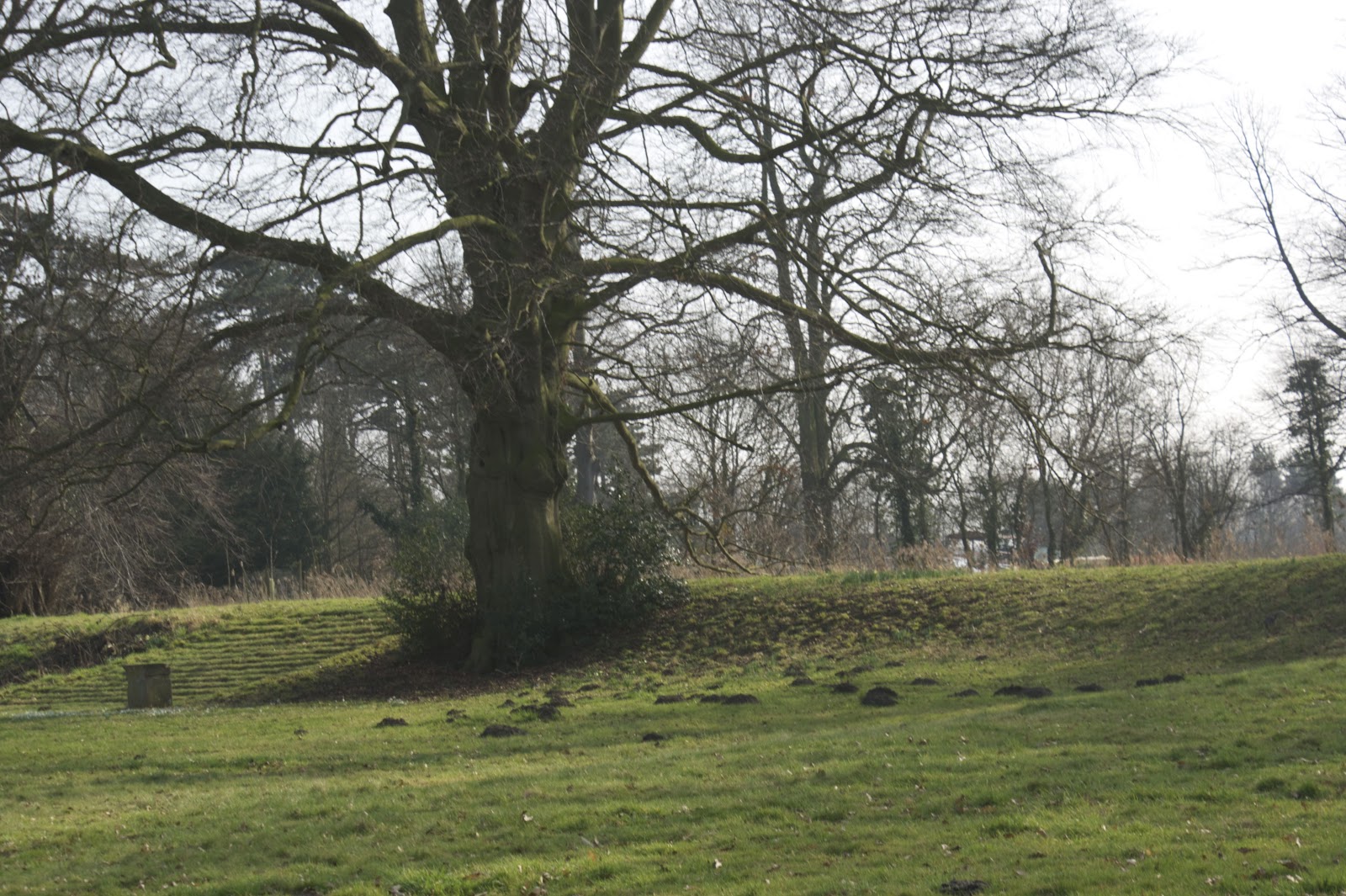
The view from Tony Butler’s desk at the Museum of East Anglian Life
where he sat and wrote this blog

The Happy Museum project proposes that museums are well placed to re-imagine a world where economic growth is not the principle measure of success of a society. Museums can show that materialism need not characterise our relationships to the world around us. A more powerful retelling of history by way of cooperation and collaboration and a more humble approach to the natural environment might help civic society address pressing issues such as climate change and resource depletion. The project suggests that museums take a more activist approach to working with communities and use their status as places for encounters to foster local campaigns.  

How far museums are able to help lead this change remains to be seen.


For some time museums have been pioneering thinking around environmental sustainability (The Garden Museum) and doing great work within their communities (most local museums!) However very few combine the two to foster the sort of citizenship that Matthew Taylor of the RSA sayshelps people to be the people they need to be, to do what they think they want to do’. At The Happy Museum Symposium last January, in typically provocative style, the Museums Association’s Maurice Davies suggested that museums were not able to link well-being with sustainability.  Our project is seeking to create a community of practice of UK museums committed to supporting transition to a high well-being, sustainable society. Two of the six museums we have commissioned to make these links explicit are:
  • Godalming Museum is working with allotment holders, cycling clubs and transition groups to develop displays and resources about a Victorian hydro electricity project in a nearby tanning works.
  • The Story Museum in Oxford has employed well-being experts and psychologists to work with architects and surveyors to influence the sustainable design of their new museum.


Faith in exponential economic growth is a hard habit to break.


Mainstream culture seems to be reluctant to question the primacy of economic growth or be brave enough (an agony for liberal cultural professionals) to suggest to the public that lower consumption might contribute to a kinder safer society. This mirrors a similar attitude in mainstream politics. The Labour politician Caroline Flint MP and the Shadow Climate and Energy Secretaries wrote a blog for The Guardian (02 April 2012) reporting that the public were more likely to accept climate change if policies were concerned with people’s everyday concerns - bills not bears!

As a Clore Fellow at the Southbank Centre in 2008 I was asked to design a sustainability programme.  On the one hand the redeveloped Royal Festival Hall had a sustainable ground source heat pump system and the Participation Team was developing programming strands around climate change through an artists in residence programme. The programme (run with Cape Farewell) pioneered a cultural response to climate change by taking artists to witness the impact of melting ice in the Arctic.  On the other hand, Southbank continued to fly in artists from half way around the world for one-off performances and relied on sponsorship from a big oil company to support the Classical Music Programme.  Here, one of the UK’s best-known cultural centres had an opportunity to have a dialogue with itself and its audience about the ethical dilemmas in bridging the gap between rhetoric, artistic excellence and the leadership responsibilities of a cultural institution.

Four years on, public funding priorities seem to be driving cultural organisations to take an ever more short-term approach. Creative Scotland recently announced that it would like to move to one-year or project-by-project funding agreements. The Department for Culture Media and Sport is driving organisations to make the most of corporate and private philanthropy. These further complicate the judgements made by organisations like museums in their programming choices and their own beliefs and values. So, big institutions that receive sponsorship from oil companies or weapons manufacturers (of late Tate - BP and the Science Museum - BAE Systems) should be prepared to substantiate why they enter into these relationships.  Bridget McKenzie, writes in a recent blog that organisations should not believe 'that when  money directly gained from ecocide or violence is given to a museum it is washed clean.' 


Tony and the Museum’s objects and land.  What sustainable challenges does he face?

So now, as the Director of the Museum of East Anglian Life (MEAL), I face my own dilemma of balancing the Happy Museum rhetoric with the desire to develop new work and the need to pay the increasing costs of rates and energy bills.  In a blog 18 months ago I suggested that museums might look to the Transition Movement as a means to co-operate, share resources and innovate but this seems a long way off – even for me!  And in a recent conversation about the future of funding to museums with my local council the chief executive talked about how this would be dependent on local economic growth, in particular new housing development. With central government grants cut and council tax rises politically unacceptable, the only source of new income to fund some services would be through payment schemes such as the New Homes Bonus incentive.  I find myself arguing that one of the strongest justifications for the continued funding of MEAL is the economic contribution to the locality - which is over £1.2m a year.


Can you spot the molehills?  One of costs the Museum encounters through nature.

So what’s the likelihood of a museum developing a financial model that combines both a cash and exchange economy? 


Time banks or skill sharing schemes are great, but they won’t pay fuel, insurance and maintenance bills for the 20 historic buildings at MEAL. Through a Social Return on Investment study we carried out in 2010 we know that our museum creates £4.50 of social value for every £1 of cash invested. We are able to use these statistics to increase funding streams.  But to be fully sustainable shouldn’t we be working to convert the social value into something practical to exchange?  

A great place to start is Mission Models Money re-think programme which looks at how culture can contribute to the Transition and to a high well-being low carbon economy. In a society re-framed by an economy more aware of its environmental limits we can expect that people will consume differently, spend their time differently, and have different expectations of their lives.  This is all food for thought for our Museum Activist who will be starting in August and will be seeking a more cooperative and collaborative approach to our engagement with local people. 


What challenges will the new Museum Activist face to
bring well-being and sustainability together?


Author | Tony Butler, Director of Museum of East Anglian Life and supporter of LMG.

Photographs | Julie Reynolds, LMG Blogger.

Tuesday, 8 May 2012

Swop Shop I

Curators successfully swop knowledge with neighbouring museum professionals and gain specialised skills and peer networks.


Louise Tomsett, Curator, Mammal Group at the Natural History Museum
handing a specimen at the Hunterian Museum.
                                                                    
Chomping on courgette cake at the Garden Museum with Jade-Lauren Cawthray, the first Trainee of Heritage Sustainability, we asked: can there be a scheme where museums share full-time paid staff? We chatted about how the London Museums Group’s Share London scheme enables museums to advertise skill sharing offers and how LMG are asking the question: what is skill sharing, how does it work and what are the challenges?  Looking around the sector the Museums Association’s Monument Fellowship scheme is a good example of a knowledge sharing project.  A small grant (£5,000) allows retiring staff to return to their museum and pass on specialised knowledge to colleagues.  Sharing Knowledge: A Toolkit the MA’s guide on how to share and sustain collections expertise and start succession planning shows:

  • that the sharing of knowledge and skills is driven by the passion of individuals. 
  • that the Fellows had an impact on the organisation, bringing collections to life and empowering all staff (learning, front of house and collections staff) to benefit from developing and sharing knowledge. [source: Lucy Shaw, Museums Association].
Milly Farrell, Curator, Odontological Collection
at the Hunterian Museum handling a specimen.
So, how can museums of all shapes and sizes share knowledge to enhance specialist skills?  

Let’s look at the Natural History Museum [NHM] and the Hunterian Museum [HM] and a skill sharing scheme they created.

It started with a conversation.  Louise Tomsett, Curator, Mammal Group, Zoology Department at the NHM and Milly Farrell, Curator, Odontological Collection at the HM developed a scheme that grew from informal conversations to a concrete but fluid, one day a week swop shop over a period of 6 weeks.

So, what skills were swapped?

  • Practical skills. Working hands-on with objects the curators gained specialised skills in chemistry and storage.  Louise worked with a Conservator and learnt additional skills in the aesthetic element of object display - a key element of the exhibitions at the HM.  These aesthetic skills can be applied to exhibition design at the NHM.
  • Peer networks. Working with a variety of professionals at the NHM, Milly gained knowledge in loans and record management and skills in destructive analysis, storage and object handling. When Milly got back to her office she was able to pick up the phone for further advice. 
  • Reflection.  Being away from phones and emails enabled Milly and Louise to focus on a single task and gave them the time to reflect on processes, which amplified their practical learning.  Louise says ‘you can lose knowledge if you don’t put it into practice.’
  • Policy change.  Observing the loans officer working at the NHM with destructive loans enabled Milly to contribute to the re-draft of the latest HM loans policy.
  • Fluid learning. The scheme responded to particular learning needs and time pressured working situations. Louise’s days were programmed around her busy schedule.  
  • Knowledge sharing.  Having the time to share knowledge in a relaxed way was important to Louise, who says that through the scheme  ‘swapping of knowledge is more casual, it’s at an easier rate, knowledge isn’t crammed into one training day.  


The Curators couldn’t emphasize enough the significance of having the time to focus on learning specific skills such as preservation and storage, destructive sampling, handling large scientific specimens, aesthetics and preserving the historic aspect of specimens through object based learning.  Educational institutions are re-introducing practical based learning.  There has been a general revival in the idea of object-based learning.  This is central to the approach we adopt in UCL’s Museum Studies programme.’ says Paul Basu, Degree Programme Co-ordinator for the MA in Museum Studies at University College London.  Helen Chatterjee, Deputy Director of UCL Museum & Collections, goes on to say ‘Object based learning sessions are excellent for providing opportunities for group work, developing communication, team working and problem solving skills. It is essential for museum staff to have excellent object handling skills.’  One of the benefits of the scheme was that object based learning topped up specialised skills and knowledge.

How did you get the scheme started and how did you justify the time out of the office? 


Milly drafted a proposal, outlining how it would contribute to her working practice and how it would benefit each organisation: ‘It wasn’t me abandoning my post to go and work at the Natural History Museum.’  Louise identified how the scheme was part of her curatorial training: The aim of the scheme was to go away with the knowledge, skills and tools to deal with a specific curation project.’   The Curators had focused learning objectives that fitted in to their professional development programmes and working practice. Konstantinos Arvanitis, Lecturer at the University of Manchester, talks about why schemes like this are successful: ‘When in post, museum staff often do not have the time and the opportunity to reflect upon their own practice; so the provision of professional development opportunities allows museum professionals to gain a better understanding of the scope, aims, challenges, limitations and possible directions of their work in the relevant professional and institutional context.’  So, in order to turn those initial conversations into a successful scheme the participants developed clear aims and objectives that were relevant to their own professional working practice.  Milly and Louise are still sharing knowledge and continuing to make invaluable reflection time and it is interesting to see that they have a continued commitment to the project. The joy of skill sharing is that staff are not lost - instead new colleagues and expertise are introduced into an organisation regardless of its size. 

Is there a museum you’d like to swop shop with or a skill sharing story you would like to share?


Author: Julie Reynolds, London Museum Group Blogger-in-Residence 
Email: news@londonmuseumsgroup.org


With thanks to Judy Lindsay, Chair, London Museum Group for her support and editing time and to all the people who have let me borrow their ear for the articles (Swop Shop I and Swop Shop II).


To learn how to run low cost, effective programmes to capture, share and use knowledge Lucy Shaw will be touring the UK running four workshops: Sharing Knowledge: Practical ideas that don't cost the earth: based on the findings of the Monument Fellowship’s scheme.  The next knowledge sharing event is in Glasgow on the 11 June.
http://londonmuseumsgroup.blogspot.co.uk/2012/05/swop-shop-ii-from-one-dinosaur-to-next.html